We grow, source and ferment native Indonesian cigar leaf — Sumatra Deli wrapper and Java Besuki binder & filler. Clean, dry, low-sweet character with the most forgiving burn in the business. Supplied to blenders and manufacturers.
Photos of rolled samples. Click any image to open it full-size, then move between them with the arrows.
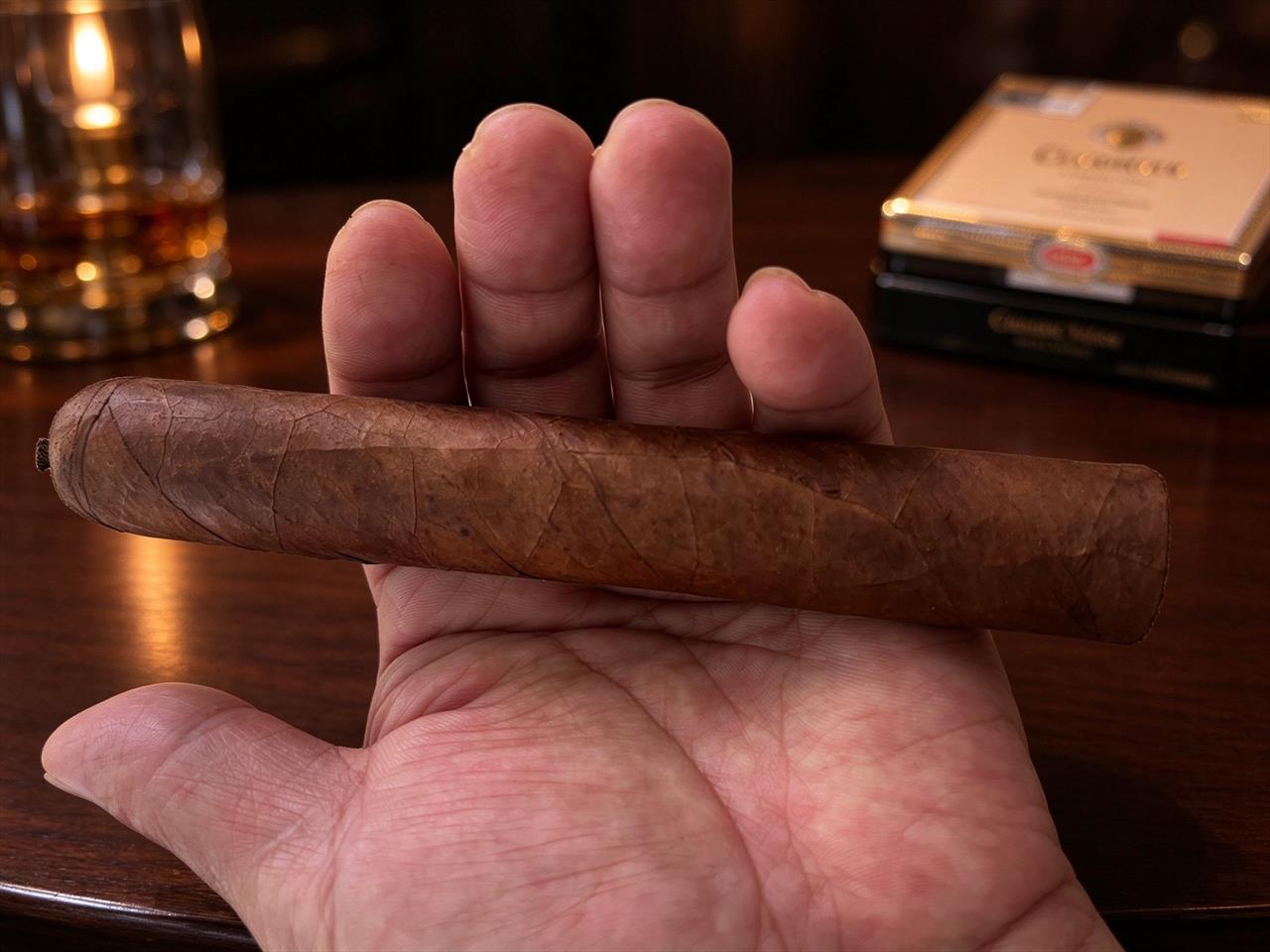
Held by hand · wooden bench
Finished cigar, daylight.
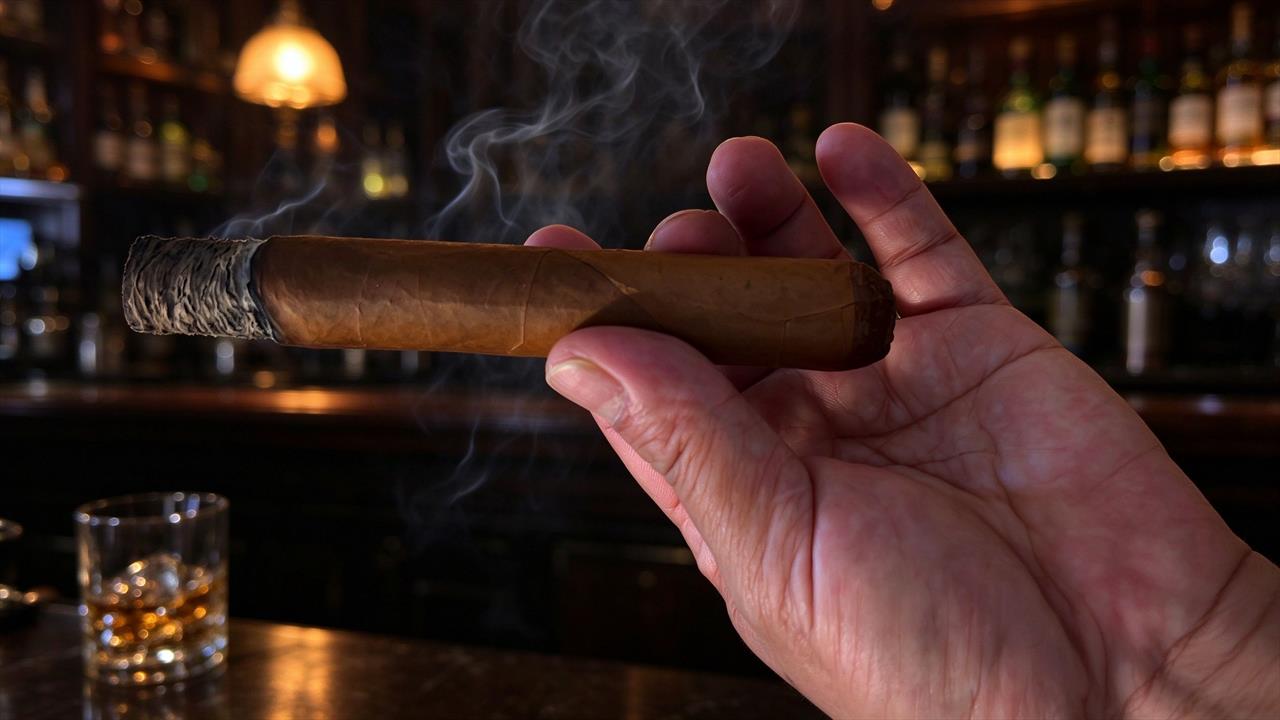
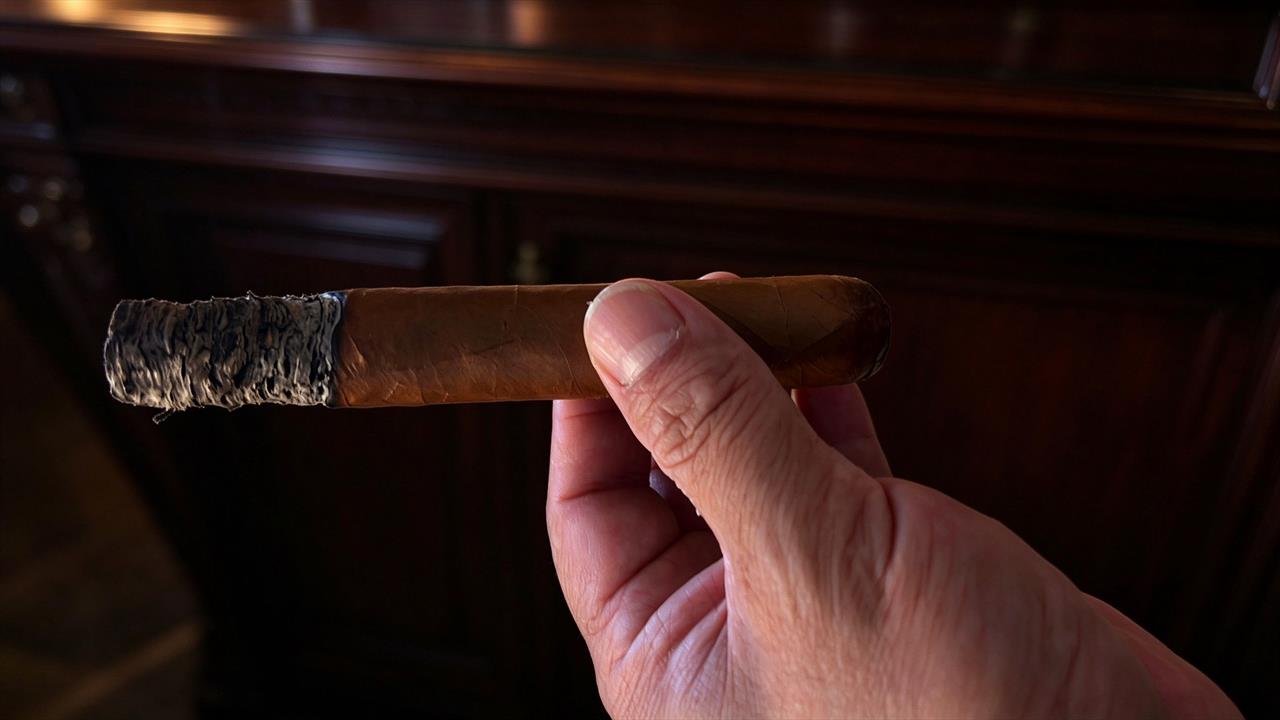
Held by hand · bar setting
Finished cigar, warm interior light.
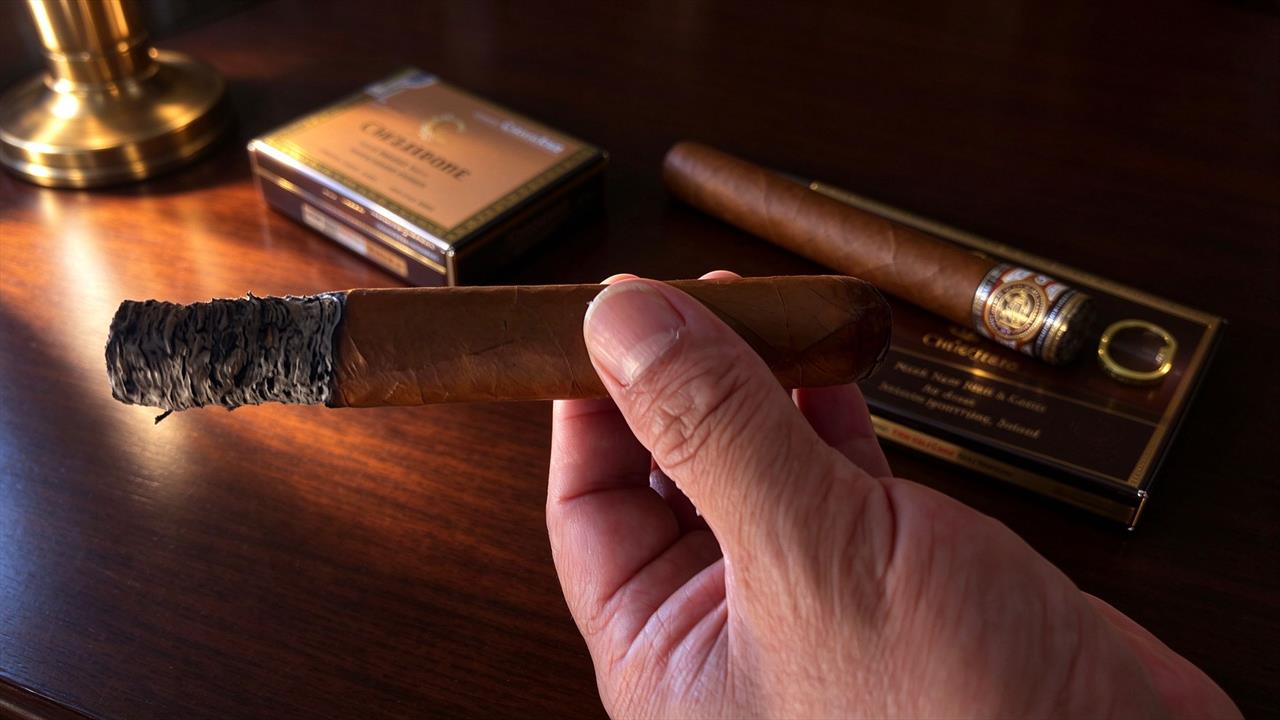
With ash · beside the box
Finished cigar photographed with its ash.
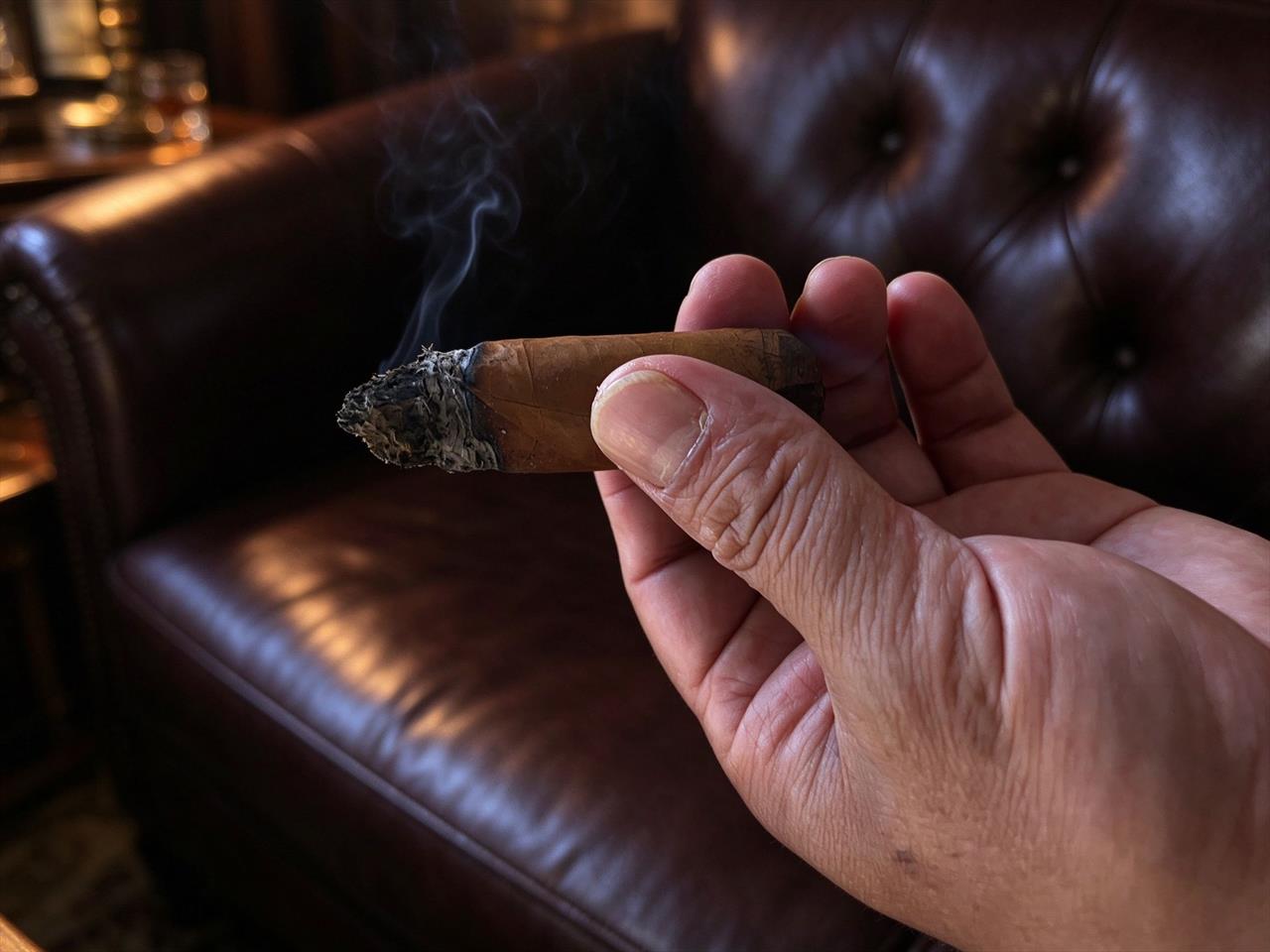
Burning · leather sofa
Finished cigar while burning.
Long ash · dark background
Finished cigar with a long ash column.
Terroir
Two islands, two very different leaves.
Equatorial volcanic soil, year-round heat and humidity, and a Dutch plantation heritage going back over a century. Indonesia is one of the world's oldest recognised cigar-leaf origins — and European buyers still pay a premium for the right grade.
Deli — Sumatra Wrapper — Deli valley · Langkat / Karo highlands · collected via Medan
Soil
Volcanic loam over deep alluvium; steady moisture, high mineral load
Role
Premium wrapper, small volume as binder. Historically tied to Dutch royal-blend cigar leaf.
Leaf
Silky surface, exceptional tensile strength and stretch; fine grain, few blemishes — rolls without splitting
Burn
Extremely even burn, clean grey-white ash, reluctant to go out
Palate
Medium-mild: white pepper, earth, faint leather, herbs. Smoke stays dry. Very low sweetness — unlike Dominican or Ecuadorian leaf. Old-European profile.
Constraint
Top-grade volume is limited and priced high; ordinary grades suit machine-made only. Handmade-grade Deli is scarce.
Jember–Besuki — Besuki foothills · Indonesia's largest producing zone · collected via Surabaya
Soil
Andosol volcanic ash soils on the Ijen–Semeru ridge; sharp day/night shift
Role
Binder and filler backbone; top grades also used as wrapper. Widest sourcing choice when siting a factory.
Leaf
Broader, more substantial leaf; two harvests giving a wide weight and aroma range
Burn
The headline asset of Indonesian leaf — once properly fermented it burns at a constant rate with a firm ash
Palate
Volcanic minerality with high blending compatibility — sits cleanly alongside Cuban, Nicaraguan and Honduran leaf
Constraint
Farmers typically ferment shallow — unprocessed Besuki needs your own depth of fermentation to reach export standard
Leaf Portfolio
Four leaf lines, four different jobs.
Every line is graded by leaf position, colour and burn behaviour before it leaves the warehouse, and the grade mix can be built to a factory's own formula. We ship whole cigar leaf, not the cut tobacco kretek buyers purchase. Volumes and grade mix are confirmed against the contract-year program.
Sumatra Deli (Wrapper)
Premium wrapper · limited binder
Indonesia's most famous leaf. Silky, highly elastic, fine-grained and remarkably clean — the rolling tolerance is what blenders pay for. Medium-mild and dry on the palate, carrying pepper, earth and a leather note with almost no sweetness.
Pepper & earth
Silky, high stretch
Old-European style
Best for
Mid-to-high handmade, European profile
Colour
Light coffee → chestnut
Supply
Scarce, contract only
Java Besuki VO (Binder / Filler)
Vroege Oogst · early harvest
The sweet end of the Indonesian spectrum. Rounded aroma with nut, toasted-bread and honey notes, smooth and easy on the palate. The natural choice whenever a formula needs softness rather than muscle. Top lots are eligible for wrapper.
Nut & biscuit
Honeyed sweetness
Smooth, low bite
Best for
Entry & mid-range, mild blends
Colour
Golden to light brown
Supply
Good, program volume
Java Besuki NO (Filler)
Na Oogst · late harvest
Heavier aroma, deeper earth and wood, slightly higher nicotine. This is structural leaf — it gives a cigar its body and thickness. Widely used by overseas houses as a blending base because it burns steadily and takes other origins well.
Deep earth & wood
Higher nicotine
Blend backbone
Best for
Full-bodied, large formatos
Colour
Medium to dark brown
Supply
Good, program volume
TBN Shade · Jember (Wrapper)
White cloth canopy · specialty
Grown under white shade cloth: thinner, more even in colour, far fewer spots. A high-end niche wrapper that benchmarks against US Connecticut Shade and costs materially more to produce. Best for pale, delicate handmade sticks and the gift market.
Cream & fine texture
Even colour, few spots
Connecticut benchmark
Best for
Pale premium, gift-market cigars
Colour
Pale yellow → light coffee
Supply
Limited, pre-booked
Flavor Profile
Score the leaf before you score the cigar.
Panel scores from our own grading bench, normalised 0–100. Use these to position a recipe before committing contract volume.
Sumatra Deli Wrapper
Premium wrapper · limited binder
Sweetness: 12
Pepper & spice: 86
Earth & mineral: 76
Wood & cedar: 46
Cream & nut: 14
Body & strength: 44
The reference Indonesian leaf. Dry, peppery and mineral, with leather and herb underneath and almost no sugar on the palate — which is exactly why European houses have bought it for a century.
Suited to: Best for mid-to-high handmade sticks in an old-European style. Do not use it when the brief calls for sweetness.
Java Besuki VO
Vroege Oogst · early harvest
Sweetness: 70
Pepper & spice: 30
Earth & mineral: 40
Wood & cedar: 34
Cream & nut: 62
Body & strength: 28
Sweet and rounded: peanut, toasted bread, a honey edge. Low nicotine, very forgiving on the draw. The component that makes a mild blend feel finished rather than thin.
Suited to: Entry and mid-range lines, and as the softening counterweight in a NO-heavy filler bed.
Java Besuki NO
Na Oogst · late harvest
Sweetness: 30
Pepper & spice: 56
Earth & mineral: 86
Wood & cedar: 78
Cream & nut: 20
Body & strength: 82
Structural leaf. Deep earth and cedar, noticeable mineral from the volcanic soil, slightly higher nicotine. Holds a large vitola together and gives a long, even burn.
Suited to: Full-bodied lines and large formatos; the base overseas houses use for blending against Cuban, Nicaraguan and Honduran leaf.
TBN Shade · Jember
White cloth canopy · specialty
Sweetness: 56
Pepper & spice: 14
Earth & mineral: 24
Wood & cedar: 22
Cream & nut: 90
Body & strength: 16
White-cloth canopy produces a thinner, more uniform, near-spot-free leaf. Delicate cream and fine texture; the cost is yield and a real premium over sun-grown Deli.
Suited to: Pale premium handmade and gift-market cigars benchmarked against Connecticut Shade. Book ahead — volume is limited.
Fermentation
The gap between farm leaf and export leaf.
Indonesian farmers cure well but typically ferment shallow. That step is the one we own: volcanic-soil leaf, long-fermented over 18–36 months. Depth of fermentation decides how the leaf burns, and it is why overseas houses buy from us rather than from the trading floor.
Contract farming & flue-cured buying
Leaf bought from contracted growers in Deli and Besuki through established local traders. Plot, harvest date and leaf position recorded at intake. Traceable to the field.
Sorting & grading
Separated by leaf position, colour and vein coarseness before anything is piled. Rejects are diverted to machine-made grades rather than pushed into the handmade line.
Long, deep fermentation
Controlled piles with timed turning cycles and monitored heat, taken well past the local norm — 18–36 months end to end once ageing is included. Bitterness and harshness drop out, the smoke turns dry and clean, and burn behaviour becomes the selling point.
Conditioning, ageing & blend prep
Slow air-conditioning back to working moisture, then warehouse ageing in bales. Blending against Cuban, Nicaraguan and Honduran leaf is done here on request, in bond.
Blending
Starting points for a factory's first year.
Three formulas that lean on Indonesian leaf only. Ratios are working references to quote against, not fixed recipes — adjust after your own burn and draw trials.
Dutch Repro — European retro line
Target market
Europe, mid-high handmade
Profile
Pepper, earth, dry finish. Almost no sweetness.
Vitolas
Robusto, Torpedo, 52–54 ring
Leaf composition,Wrapper Sumatra Deli, light-coffee, 1st–2nd positionBinder Besuki VO, broad-leaf selectionFiller Besuki VO 50% / Besuki NO 35% / Deli trim 15%
Cream Java — Pale premium line
Target market
Gift, pale-premium, SE Asia
Profile
Cream, toasted nut, honey. Very smooth.
Vitolas
Petit Corona, lancero formats
Leaf composition,Wrapper TBN shade, pale, spot-freeBinder Besuki VO, thin primingFiller Besuki VO 80% / Besuki NO 20%
Besuki Backbone — Full-bodied line
Target market
Full-bodied, large formatos
Profile
Deep earth, cedar, mineral. Solid body.
Vitolas
Churchill, Gordo, 56–60 ring
Leaf composition,Wrapper Sumatra Deli, darker chestnut lotBinder Besuki VOFiller Besuki NO 70% / Besuki VO 30%+ imported filler up to 40% on request
Export
What a purchase order actually looks like.
Reference terms for the layout. Confirm all figures against current Indonesian tobacco and excise regulation before quoting a client.
Grading
By leaf position, colour, size and burn test. Wrapper lots additionally sorted for vein coarseness and elasticity.
Moisture at shipment
13–16%, conditioned slow and re-checked at pallet close. Over-dry leaf cracks on the rolling bench.
Packing
Kraft-lined cases, leaf in conditioned bales, palletised and shrink-wrapped. Case marking per buyer spec.
Minimum order
Trial lots from 100 kg per grade; production volume quoted by contract-year program.
Lead time
Graded stock 4–6 weeks from order. Freshly fermented lots follow the pile calendar and are booked in advance.
Ports & terms
Deli leaf via Medan / Belawan, Java leaf via Surabaya. FOB, CFR or CIF, Incoterms 2020.
Documentation
Phytosanitary certificate, certificate of origin, analysis for nicotine and moisture, fumigation record, commercial packing list.
Compliance
Subject to Indonesian tobacco excise and export rules and the import regime of the destination market. Documentation carried by the buyer's importer of record.
FAQ
Questions blenders ask us
The six questions blenders and factories ask before ordering: why Deli wrapper costs what it does, whether sweetness can be engineered, whether this is kretek supply, how to verify a native Indonesian seedline, Medan or Jember, and what a first-year factory can honestly commit to.
Why is Deli wrapper so much more expensive than Java leaf?
Top-grade Deli is a small, tightly-held crop and the handmade-eligible share is scarcer still. You are paying for elasticity and rolling tolerance, not just aroma. Ordinary grades are cheap — but they are machine-grade. Quote the grade you actually need, not the origin name.
Your leaf is not sweet. Can you fix that?
Two different states of the same leaf. Fresh and flue-cured Besuki VO really does carry nut-and-honey sweetness; what we ship is that leaf after long fermentation and ageing, when the sugar has been converted — which is why the finished profile is clean, dry and low-sweet. The two statements are not in conflict, they are the two ends of one chain. If the brief is Cuban-style rich sweetness, local leaf cannot deliver it; that has to come from imported filler. We blend in bond with Cuban, Nicaraguan and Honduran leaf — budget for it, and do not expect Deli or NO to supply the sweetness.
How do I verify a leaf is native Indonesian Sumatra seedline?
Ask for the seedline and plot record, not a certificate of origin. A country-of-origin document will happily cover transplanted Central- or South-American stock grown locally, which tastes completely different. We record seedline, grower plot and harvest date per lot and share it with buying clients.
Should the factory base be in Medan or Jember?
Whichever leaf leads your formula, plus your port and labour economics. Deli consolidates in Medan (Belawan); all Besuki moves through Jember toward Surabaya — the two are about 1,700 km apart on different islands. Most practical answer: one primary fermentation floor at the lead origin, a buying and sorting station at the other.
What volume can a first-year factory realistically commit to?
Start with trial lots per grade, then a contract-year program rather than a spot order. Fermentation depth is calendar-bound — you cannot buy six months of acceleration. Plan the first year around 4–6 week lead times on graded stock and pre-book anything freshly fermented.
Do you supply raw material for kretek (clove cigarettes)?
No. Kretek buys dry cut thread and stem, flavoured with clove and spice casing; we ship whole leaf, graded by position, colour, vein coarseness and burn, conditioned to 13–16% moisture, with nothing added. Indonesia is genuinely both a kretek country and a cigar-leaf origin, and the two chains differ in what they buy, how they process it and which documents they clear. Search for cigar leaf here; search for kretek somewhere else.
Contact
Start with a trial lot.
Tell us the formula you are chasing and the volume behind it. We quote grade, availability and a sample lot against your target profile.
Sourcing offices
Medan (North Sumatra) · Jember (East Java)
Enquiries
WeChat kk428137
Hours
WIB (UTC+7), Mon–Sat 08:00–17:00
Trade language
English · Bahasa Indonesia · 中文
Visits
Fermentation and grading floor visits by appointment, aligned to the pile calendar
Scan to add us on WeChat
Business-to-business supply enquiry only. Leaf is subject to Indonesian tobacco regulation and excise duty. No consumer product is offered here.